How to Compare Garage Door Accessories in Parker Like a Pro
Shopping for garage door accessories sounds simple until you stand in front of a wall of remotes, keypads, smart hubs, backup batteries, safety sensors, and decorative hardware that all claim to be compatible, secure, and worth the money. That is usually the moment a straightforward errand turns into an expensive guessing game.
In Parker, that confusion gets amplified by local realities. Homes range from newer builds with app-connected openers to older garages still running reliable but dated systems. Weather matters, too. Cold snaps can expose weak batteries, cheap plastic keypads, and sensors that were only barely aligned in mild conditions. If you want accessories that actually improve convenience and safety, not just add clutter, you need to compare them the way a technician or experienced homeowner would.
The good news is that the process is less about memorizing brands and more about asking the right questions. Once you know what affects compatibility, durability, ease of use, and long-term value, the best option usually becomes obvious.
Start with the opener, not the accessory
The most common mistake people make is choosing an accessory first because it looks useful, then trying to force it onto an opener that was never designed for it. Every comparison should begin with the opener itself. The brand, model, motor type, frequency, production year, and control board capabilities all shape what you can add.
A garage door remote is the classic example. Two remotes can look nearly identical on the shelf, yet one pairs in thirty seconds while the other will never work with your system. Universal remotes can be helpful, but "universal" almost always comes with fine print. Some work with a broad range of rolling-code systems but not all of them. Some support only certain frequencies. Some can control multiple doors, but only if those doors use compatible logic.
Keypads create similar issues. Wireless keypads are convenient, especially for households with kids, dog walkers, contractors, or frequent deliveries. Still, not every keypad will sync with every opener. Before comparing button size, backlighting, or weather resistance, verify that the unit supports your opener's brand and generation. I have seen homeowners in newer Parker subdivisions buy a keypad that looked perfect online, mount it neatly beside the trim, and only then learn their opener needed a different protocol.
If you are not sure what opener you have, look for the label on the motor housing. It usually includes the manufacturer, model number, and manufacturing date. If the label is faded, the color of the learn button often helps narrow compatibility. That detail alone can save you from buying the wrong accessory.
What actually matters when you compare accessories
Price gets the most attention, but professionals tend to compare garage door accessories through a different lens. They focus on how the item will perform six months and three years after installation, not just the day it comes out of the box.
Here are the factors that deserve the most weight:
- Compatibility with your opener and door setup
- Weather resistance, especially for outdoor keypads and exposed electronics
- Build quality of buttons, housings, clips, and battery compartments
- Security features such as rolling codes, lockout options, and encrypted app access
- Ease of programming, maintenance, and replacement parts availability
Those five points will tell you more than any marketing headline. A cheap keypad that fails after one winter is not a bargain. A smart controller with a polished app is not useful if it drops off your Wi-Fi every few weeks or sends delayed alerts. A stylish decorative handle is not worth much if it rusts, loosens, or interferes with insulated steel panels.
When people search for Garage Door Accessories Parker, they often start with convenience, but the better approach is to think in layers. First, the accessory must work with your existing system. Second, it should survive local conditions. Third, it should genuinely improve how you use the garage.
Remotes: small device, big differences
Remotes are one of the easiest accessories to underestimate. Most people assume a remote is a remote. In practice, differences show up fast.
The first point of comparison is response consistency. A quality remote should trigger the opener reliably from a reasonable distance, whether you are turning into the driveway or parked directly in front of the garage. If you have to press the button twice, aim it just right, or hold it in the air like a TV clicker from the 1990s, something is off. That could be a weak battery, interference, or simply a lower-quality remote.
Build quality matters more than buyers expect. On a daily-use remote, the weak points are usually the button membrane, visor clip, battery cover, and internal contacts. In active households, especially with teenagers carrying remotes in backpacks or cup holders, those parts take a beating. A heavier, sturdier remote often justifies its extra cost because it lasts.
Multi-button remotes are useful for homes with more than one garage door, a gate, or a detached shop. But compare their programming process before buying. Some are easy to pair and manage. Others are so finicky that owners avoid reprogramming them until they are forced to.
There is also a security angle. Older fixed-code remotes are less secure than modern rolling-code systems. If your opener is old enough that replacement accessories are hard to find, it may be time to think beyond the remote and consider whether the opener itself is the weak link.
Keypads: the accessory that earns its keep
For many families, the wireless keypad ends up being the most used accessory after the main remote. It solves a lot of everyday problems. Kids forget keys. Runners do not want to carry a remote. Guests need temporary access. Service providers need entry when no one is home.
That convenience makes keypad quality worth careful comparison. Outdoor durability should be near the top of your list. In Parker, sun exposure can fade labels and make cheap plastic brittle, while winter cold can affect battery performance and button responsiveness. A keypad with a weather cover and solid tactile buttons usually lasts longer than a flush, minimalist model that looked good in the package.
Backlighting is another feature that sounds minor until you use the keypad on a dark evening. The same goes for larger buttons. On paper, that may seem like a comfort feature. In real life, it often determines whether the keypad is easy to use in gloves or when your hands are full.
Some newer keypads allow temporary or programmable PINs. That can be useful for short-term access, especially if you prefer not to hand out remotes. The trade-off is complexity. More features can mean more setup steps and, in some cases, more troubleshooting later. If you value simplicity, a durable standard keypad may serve you better than a feature-heavy one.
Smart accessories: useful, but only when the basics are right
Smart garage accessories can be excellent, and they can also be the fastest route to buyer's remorse. The difference usually comes down to expectations and infrastructure.
A smart controller or Wi-Fi bridge should do a few things well. It should report door status accurately, open and close the door without Garage Door Accessories Parker long lag times, and stay connected without regular intervention. If those basics are inconsistent, extra features do not matter much.
Wi-Fi strength in the garage is a hidden issue. Many Parker homes have solid internet inside the house but weak coverage at the far edge of the garage, especially in detached structures or garages with finished walls and insulation. Before buying a smart accessory, test the signal where the opener is mounted. If the connection is weak, you may need a mesh node or extender. Without that, even a good smart system can behave badly.
App quality is another major comparison point. Read how the app handles alerts, multiple users, scheduling, and guest access. A polished product page does not guarantee a polished app. Some systems send instant notifications when the door opens. Others are delayed enough that they lose practical value. If package security matters to you, those delays can become frustrating quickly.
Smart accessories also raise privacy and account security questions. Two-factor authentication, user permission controls, and clear account management tools are worth prioritizing. Convenience should not come at the cost of easy unauthorized access.
Backup batteries and power reliability
Backup batteries Garage Door Accessories Parker rarely get attention until the power goes out and the garage is your only practical entrance. Then they become the accessory everyone wishes they had checked sooner.
When comparing battery backups, start by confirming whether your opener supports one natively. Some units accept a manufacturer-specific battery. Others require an integrated system built into a certain opener line. This is another area where universal options may not be as universal as they appear.
Capacity matters, but so does age tolerance. A battery that performs well in ideal conditions may lose practical strength after a couple of years in a garage that swings through seasonal temperature changes. Ask how many cycles the battery can typically support during an outage, and whether replacement batteries are readily available. A backup is only helpful if you can replace it without a scavenger hunt.
There is also a maintenance habit involved. Homeowners often install a battery backup and forget it until an outage reveals it is dead. Better systems provide audible or visual warnings when the battery starts to fail. That feature alone can justify a slightly higher price.
Safety sensors and lighting accessories
Safety accessories tend to get less excitement than remotes or smart controls, but they deserve serious attention. A misaligned, low-quality, or aging safety sensor can stop the door from closing properly, reverse it unexpectedly, or create an intermittent issue that drives everyone in the house crazy.
If you are replacing sensors, compare them for compatibility first, then look at mounting design and housing durability. Stronger mounts hold alignment better, which matters in garages where vibration, bumps, or storage changes can knock things out of position. That is especially common in busy family garages where bikes, rakes, and bins migrate over time.
Accessory lighting can also be worthwhile, particularly motion-activated LED systems or opener-integrated lighting enhancements. Here, brightness claims matter less than beam spread and reliability. A harsh light that creates deep shadows is often less useful than a broader, softer LED setup that actually illuminates the full garage. Cold-weather performance is worth considering too, since lower-grade LEDs and drivers can be inconsistent in unheated garages.
Decorative hardware and appearance upgrades
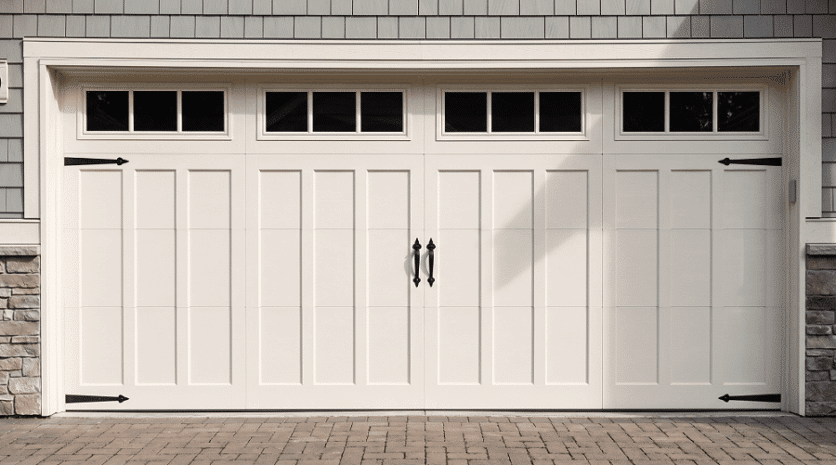
Not every garage door accessory is electronic. Decorative handles, hinge accents, trim enhancements, and upgraded rollers can improve the look and feel of a garage door in a way that is immediately visible from the curb.
For decorative hardware, material quality is everything. Thin stamped metal can look convincing online and disappointing in person. Powder-coated finishes generally hold up better than basic painted finishes, but placement, sun exposure, and moisture still affect longevity. If the garage door faces strong afternoon sun or frequent wind-driven weather, avoid bargain hardware that does not clearly state its finish quality.
There is also a style question. Parker neighborhoods include everything from farmhouse-inspired exteriors to contemporary homes with clean lines. The best decorative accessories match the architecture instead of competing with it. Oversized faux hinges on a modern flush-panel door often look forced. Subtle hardware on a carriage-style door can look unfinished. The right choice is usually the one that feels native to the house.
Operational upgrades like nylon rollers deserve mention here too. They are not glamorous, but they can noticeably reduce noise compared with older metal rollers. If someone in your home leaves early or comes in late, quieter operation may matter more than any visible accessory.
How pros compare value instead of just price
A professional comparison is rarely about finding the cheapest accessory. It is about cost over time. That includes lifespan, failure rate, installation hassle, compatibility certainty, and whether the accessory solves a real problem.
I once helped a homeowner sort through three keypad options that were separated by less than forty dollars. The cheapest had no weather cover, a lighter housing, and weaker compatibility documentation. The middle option was well-built, simple, and fully compatible. The most expensive model added temporary codes and a sleeker profile. For that household, the middle option was the clear winner. They did not need temporary guest access often, but they did need something dependable through winter. The best value was not the cheapest or the fanciest. It was the one that matched actual use.
That kind of decision comes up constantly with Garage Door Accessories Parker homeowners consider. Spending a little more often makes sense when it buys compatibility confidence and fewer service calls. Spending more does not make sense when the added features will sit unused.
Questions worth asking before you buy
A short pause before purchase can prevent most accessory mistakes. These are the questions I would ask if I were comparing products for my own garage:
- Will this accessory work with my exact opener model and year?
- Is it likely to hold up in an unheated or partially exposed Parker garage?
- Does it improve daily use, or just add another device to manage?
- If it fails, can I replace batteries, parts, or the whole unit easily?
- Is the manufacturer clear about support, setup, and warranty terms?
If a product page or seller cannot answer those questions clearly, that uncertainty is part of the price. People often overlook that. Time spent troubleshooting, returning incompatible products, or paying for second installations is still money.
Installation and support should influence the choice
Some accessories are genuinely simple to install. Others look simple until you are on a ladder with a blinking opener light, an unhelpful manual, and a smartphone app that keeps timing out.
If you are comfortable pairing remotes, changing batteries, and following wiring diagrams, many accessories are manageable. But if a product requires hardwiring, control board access, or integration with an older system, support quality matters. Good instructions, responsive customer service, and local installer familiarity can make one brand much more practical than another.
This is especially relevant when comparing smart accessories and backup systems. A unit that costs slightly less but has poor setup documentation may be more expensive in the end if it requires service help. On the other hand, a higher-priced accessory with clear instructions and strong local support can be the smoother investment.
When homeowners in Parker ask for advice, I usually tell them to check whether local garage door technicians regularly install the accessory they are considering. Products that are common in the field tend to have fewer surprises. Products that nobody local wants to touch often have a reason.
Matching the accessory to the household
The best accessory depends on who uses the garage and how.
A family with school-age kids may get the most value from a keypad and durable multi-user remote setup. A homeowner who travels frequently may care more about smart monitoring and alert history. Someone using the garage as a workshop may prioritize bright lighting, quieter rollers, and reliable backup power. An older homeowner may prefer larger-button remotes and simpler controls over app-heavy systems.
This is why generic "best accessory" rankings are often misleading. They flatten real-world needs into a single recommendation. Professional comparison works the other way around. It starts with the household, then filters products through compatibility, durability, and actual use.
When replacement makes more sense than adding accessories
There is a point where comparing accessories becomes the wrong exercise. If your opener is very old, lacks modern safety or security standards, struggles with available accessories, or has intermittent reliability problems, layering new add-ons onto it may not be wise.
That does not mean every older opener must be replaced. Some are workhorses. But if you find yourself trying to solve multiple problems at once, poor remote range, no keypad support, no battery option, no smart compatibility, and aging safety sensors, a newer opener may deliver better value than a cart full of partial fixes.
That is not the answer people always want, but it is often the honest one. Accessories perform best when they are supporting a sound system, not compensating for a failing one.
The pro mindset
Comparing garage door accessories like a pro is really about discipline. You resist flashy features until compatibility is confirmed. You think about weather, daily habits, and long-term use. You weigh support and reliability alongside price. And you stay skeptical of anything described in broad terms but documented vaguely.
For most buyers in Parker, the right accessory mix is not huge. It is selective. A reliable remote or two, a weather-resistant keypad, perhaps a smart controller if the Wi-Fi is strong, and a backup battery if power outages would create real inconvenience. Add decorative or operational upgrades where they genuinely improve the experience.
That approach keeps the garage simpler, safer, and easier to live with. More importantly, it helps you spend money where it counts, on accessories that earn their place every time the door goes up or down.
Select Garage Doors
11479 Pine Dr
Parker, CO 80134, United States
Phone: (303) 228-0018
FAQ About Garage Door Accessories Parker
Where can I find garage door accessories?
Garage door accessories are available from garage door service companies, authorized dealers, home improvement stores, and specialist suppliers. Select Garage Doors supplies and installs accessories for homeowners in Parker, including compatible remotes, wireless keypads, weather seals, and smart controls. Check your opener model and door specifications before choosing a replacement or upgrade.
How to make a garage door more attractive?
Cleaning the door, refreshing a manufacturer-approved finish, and choosing coordinated decorative handles or hinge accents can improve its appearance. Compatible window inserts may also change the look of an existing window section. Match accessories to the door material and style, and make sure added hardware does not interfere with movement, seals, or safety equipment.
Where can I buy garage door inserts?
Decorative window inserts can be sourced through the door manufacturer, an authorized garage door dealer, or a supplier that carries parts for your specific door series. Match the model, window frame dimensions, and attachment system; inserts are not universally interchangeable. Ask a professional to confirm compatibility before ordering, especially if the work involves glass or changes to a door section.